

Australia’s APRA Warns AI & Global Market Volatility Could Test Financial Stability
Insight . Intelligence . Accountability
A new wave of professionals is transforming Governance, Risk, and Compliance from a rigid framework into a dynamic force for trust, innovation, and resilience. Governance, Risk, and Compliance (GRC) has long been associated with boardrooms and bureaucracy—a domain reserved for executives and auditors. But that image is changing fast.
A sharp fall in financial asset prices could leave Australian institutions facing higher funding costs and diminished investment values. A disruption at a major technology provider could affect several institutions at once. The Australian Prudential Regulation Authority (APRA) is concerned about the possibility of such pressures occurring together.
In its latest System Risk Outlook, the regulator warned that uncertainty in global financial markets and the rapid development of artificial intelligence are creating new threats to Australia's financial stability. The assessment comes despite continued strength in the country's banking system and substantial financial buffers among households.
APRA's concern is less about the financial system's present condition than its capacity to withstand a crisis involving several kinds of disruption. Banks, insurers and superannuation trustees must be prepared for financial shocks that coincide with failures in critical operations, particularly as their dependence on shared technology providers increases.
“Australia’s financial system remains resilient, but the risk environment is becoming less forgiving,” APRA Chair John Lonsdale said.
The regulator publishes its outlook twice a year, examining international and domestic developments that could expose vulnerabilities in Australia's financial system. Its latest report identifies mounting pressure in global financial markets, the growing operational risks associated with AI and persistent household indebtedness among the principal concerns.
A sudden repricing in global markets could increase borrowing costs for Australian financial institutions and reduce the value of their investments. APRA warned that an unpredictable international environment, together with vulnerabilities in financial markets and critical infrastructure, could make future shocks more damaging.
AI presents a different problem. While advances in the technology are supporting economic activity, they are also accelerating cyber and operational threats. APRA warned that these risks could have consequences beyond individual institutions, particularly where financial firms rely on the same critical service providers.
That dependence creates a potential weakness even among otherwise well-prepared institutions. A disruption affecting a widely used provider could interfere with operations across several firms, regardless of the financial strength of each.
Lonsdale said the growing reliance on a relatively small number of material service providers was among the developments increasing the financial system's exposure to operational disruption.
Household Debt Remains a Concern
Australia's domestic financial conditions offer some reassurance. Housing prices have declined and lending activity has slowed, according to APRA, while higher living costs continue to put pressure on household budgets. Nevertheless, the regulator found that most households retain substantial equity and repayment buffers. Banks and households remain resilient overall. High household indebtedness remains an important exception to that generally favorable assessment.
APRA warned that elevated debt levels could amplify the effects of a more severe economic downturn. Although existing household buffers provide protection, the amount of debt carried by borrowers remains a vulnerability should economic conditions deteriorate substantially.
The regulator did not suggest that current household pressures were threatening the stability of the banking system. Its concern is that a more severe downturn could expose weaknesses that remain manageable under present conditions.
The findings also illustrate why APRA continues to distinguish between current financial strength and the capacity to withstand future shocks. Resilience depends partly on the buffers available today, but also on how those resources hold up when economic conditions worsen.
Preparing for More Complex Crises
APRA's recent stress-testing work provides grounds for confidence in the financial system's ability to withstand substantial financial pressure. The regulator said its first System Risk Stress Test, together with other recent exercises, offered further evidence that Australian financial institutions could absorb significant market and liquidity stress.
Those findings support APRA's assessment that the financial system remains well positioned to withstand a turbulent international environment. They do not, however, remove the need for institutions to prepare for operational failures occurring alongside financial disruption.
“Our financial system is well placed to withstand this turbulent period,” Lonsdale said. “Financial buffers and robust operations provide a strong foundation for system resilience.”
The regulator is placing particular emphasis on practical crisis-management capabilities. In line with its latest Corporate Plan, APRA intends to remain focused on ensuring that banks, insurers and superannuation trustees are prepared for financial and operational shocks, including emergencies involving several simultaneous pressures.
That expectation has implications for institutions' management of technology dependencies, operational continuity and crisis response. APRA's warning about common service providers suggests that preparations confined to an institution's own systems may not adequately account for disruptions affecting the wider financial sector.
The outlook does not announce new prudential requirements. It instead sets out the vulnerabilities APRA considers significant and the areas in which it expects institutions to maintain their resilience.
For the regulator, the next challenge is ensuring that the financial strength demonstrated through recent stress testing is matched by the ability to manage more complicated emergencies. Institutions may be capable of absorbing substantial market losses while still depending on critical services whose failure would affect much of the financial system at once.
APRA's supervisory focus will therefore extend beyond whether institutions can withstand financial stress to whether they have the operational readiness and crisis-management capabilities needed when several pressures emerge together.
Your email address will not be published. Required fields are marked with *

CPMI and IOSCO Release New Guidance on Managing Business Risks in Financial Market Infrastructures
The Committee on Payments and Market Infrastructures (CPMI) and IOSCO have released final guidance to help financial market infrastructures strengthen their approach to managing business risks and preparing for potential financial losses. The guidance clarifies existing requirements under Principle 15 of the Principles for Financial Market Infrastructures, following an assessment that identified weaknesses in how some institutions were applying the standards.

# Telemedicine CEO Sentenced to 19 Years Over $1 Billion Medicare Fraud Scheme
A Kansas healthcare technology executive has been sentenced to 19 years in prison for his role in a fraud scheme that generated more than $1 billion in claims against Medicare and other federal healthcare programmes. The case exposed how fraudulent medical orders, illegal kickbacks and deceptive telemedicine practices were used to exploit public healthcare funds.
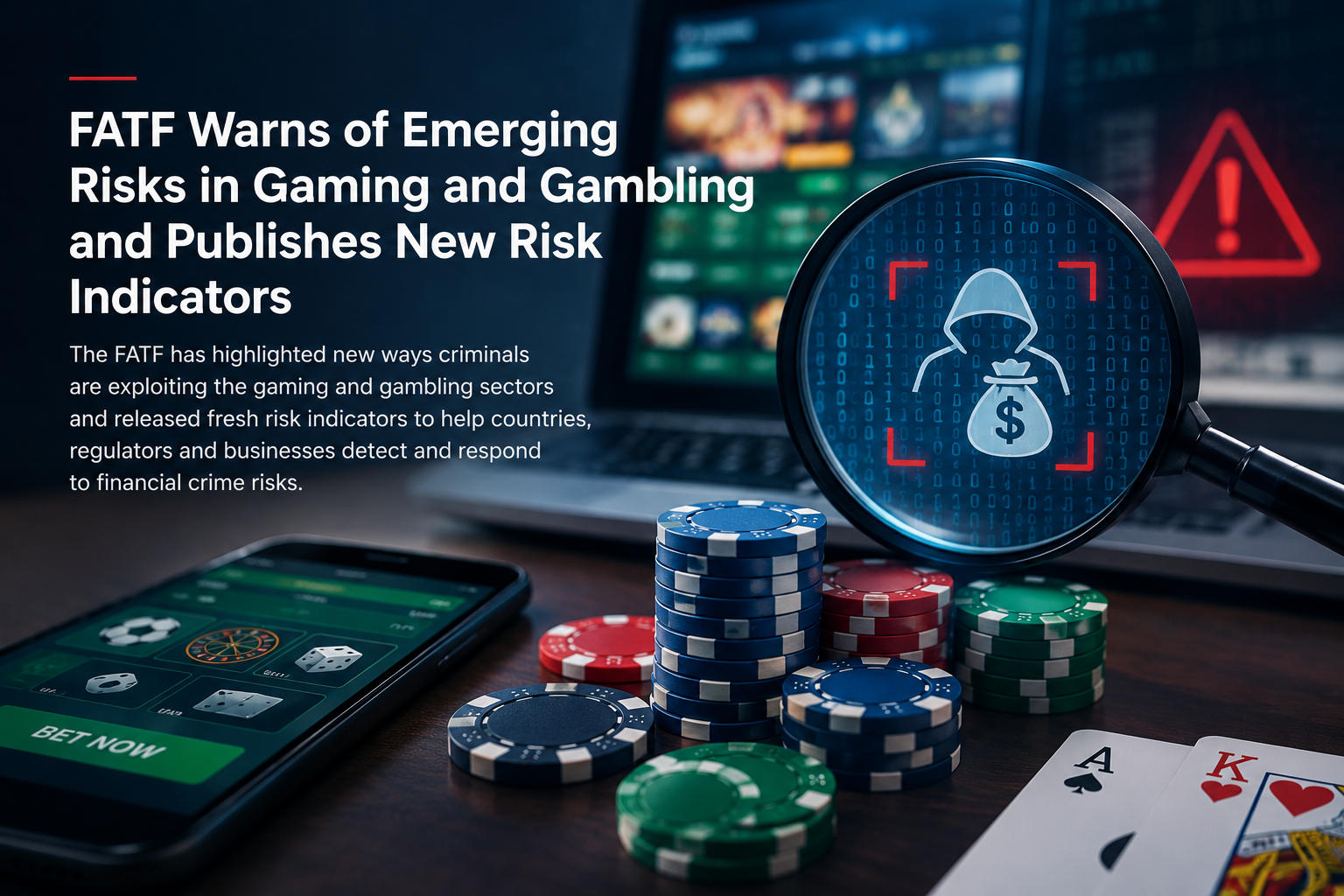
FATF Warns Gaming and Gambling Sectors Face Growing Financial Crime Risks
The Financial Action Task Force (FATF) has identified new ways criminals are exploiting gaming and gambling platforms to move money, evade controls and support wider criminal activity. With online and cross-border gambling expanding rapidly, the FATF has issued new risk indicators to help regulators, financial institutions and industry operators detect suspicious activity and respond to money laundering, terrorist financing and other financial crime risks.

Guns, Camouflage and Facebook: How Colombia’s ‘Narcoinfluencer’ Turned Crime Into Content
Nain Pérez, known online as Bendito Menor, built a huge following by mixing images of money, romance and armed life with a criminal persona. His rise shows how social media can turn organized crime into something dangerously close to celebrity culture.

ENISA Warns Digital Dependencies Are Expanding Europe’s Cyber Attack Surface
Europe’s growing reliance on interconnected digital technologies is creating new cybersecurity challenges, with ENISA warning that increasing digital dependencies could widen the region’s exposure to cyber threats, vulnerabilities and potential disruptions across critical sectors.
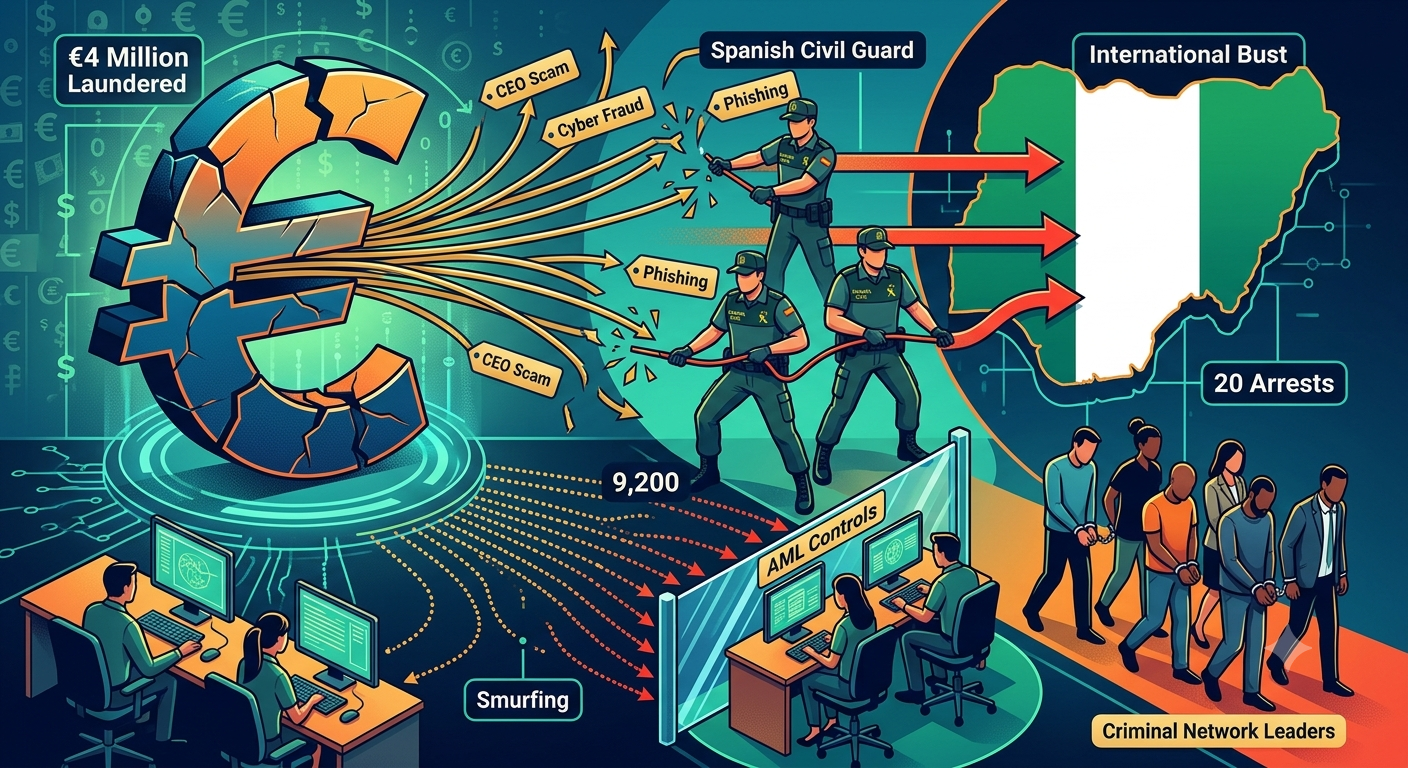
A network that laundered more than four million euros from scams by sending the money to Nigeria falls
Spanish Police Bust €4 Million International Money Laundering Ring Bound for Nigeria. The Spanish Civil Guard has dismantled a criminal network responsible for laundering over €4 million generated through cyber fraud, CEO scams, and identity theft across Europe. The organization utilized "smurfing"—splitting large illicit funds into more than 9,200 small-wire transfers using falsified passports and stolen identities—to bypass anti-money laundering controls and funnel cash into Nigeria. The two-phase operation led to 20 arrests, investigations into 11 others, and raids targeting key leaders in Bilbao as well as several complicit money transfer agencies.
No recommended articles found.